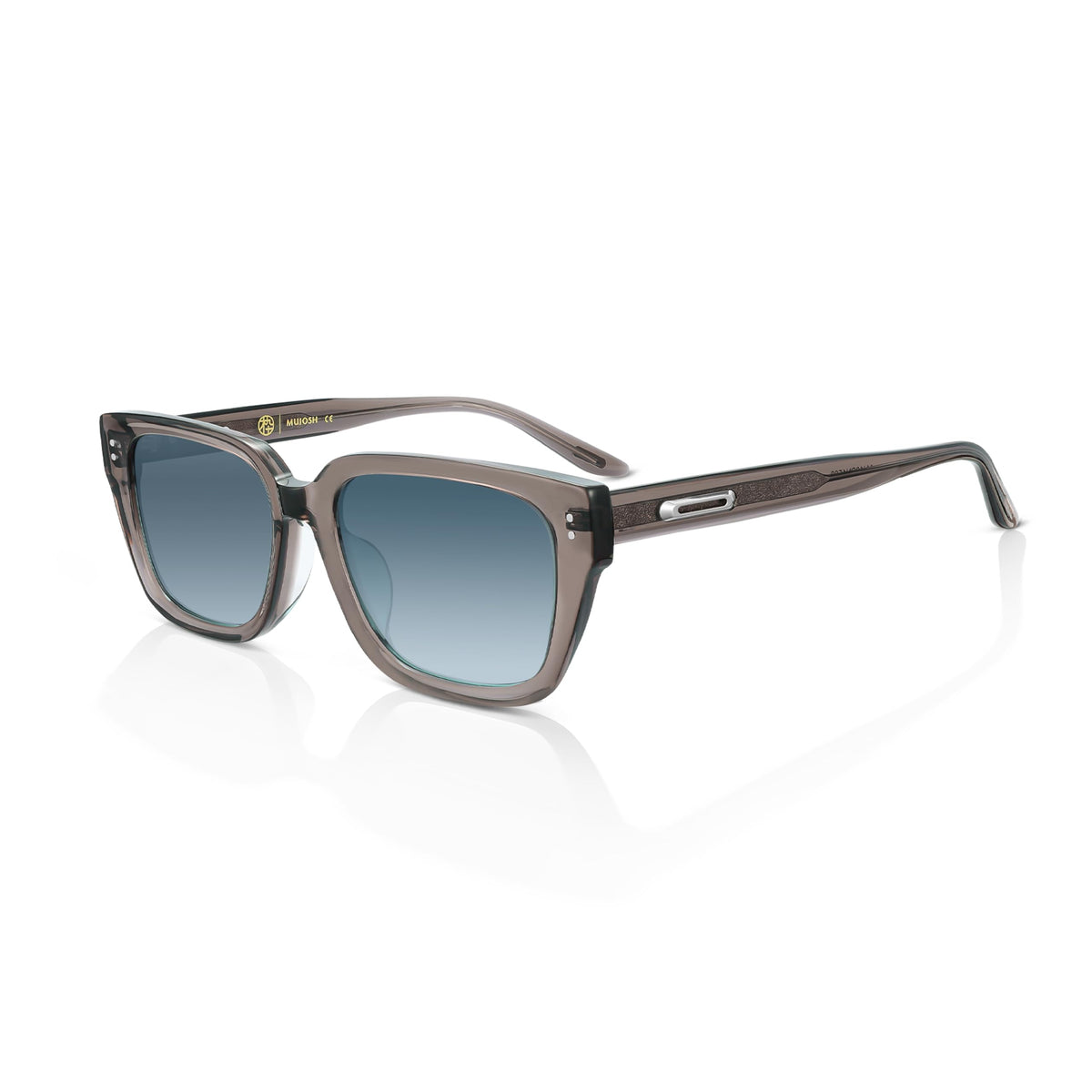
What acetate actually is
Cellulose acetate starts from cellulose, the fiber in wood pulp and cotton. It is processed into a plastic and pressed into thick sheets, often with several colors layered together. Frame makers cut the front and temples out of those sheets, then shape, tumble and polish them over several days.
That process is why acetate frames can have tortoise patterns, translucent layers and colors that change from front to side. The pattern is in the material, not printed on top.
Acetate vs plastic: the differences you can feel
"Plastic glasses" usually means injection molded frames: liquid plastic poured into a mold, cooled and finished. They are cheaper to make and can be very light, but they behave differently.
| Acetate | Molded plastic | |
|---|---|---|
| How it is made | Cut from sheet, then polished | Poured into a mold |
| Color | Runs through the material | Often a surface coat that can wear |
| Look | Depth, translucency, layered patterns | Flatter, more uniform |
| Feel | Solid, a little heavier | Lighter, can feel hollow |
| Adjusting the fit | An optician can warm and reshape it | Little or no adjustment |
| Repairs | Often polished back after scratches | Usually replaced |
| Price | Higher | Lower |
The practical difference is fit. Because acetate can be warmed and bent a little, an optician can adjust the temples, and on many frames the bridge, so the glasses sit properly on your face. A molded plastic frame mostly fits or does not.
Acetate vs TR90
TR90 is a different material again: a flexible thermoplastic used for light frames that bend rather than snap. It is lighter than acetate and very forgiving, which is why it is common in sport and everyday frames. Acetate has the richer color and the polished finish; TR90 has the lighter weight and the flex.
If weight is your main concern, TR90 is the better choice; the Lvy Narrow is a cat eye in lightweight TR90. If you want depth of color and a frame that can be adjusted, choose acetate. For the lightest metal option, see the guide to titanium glasses.
Is acetate worth it?
For most people who wear a pair every day, yes. Acetate frames keep their color, can be adjusted as they settle, and can often be polished back when they scuff. They also look like what they are: a solid, finished object rather than a molded part.
The trade offs are weight and price; if you plan to pay from a health account, check whether glasses are FSA or HSA eligible first. Acetate is heavier than TR90 or titanium, so a very large acetate frame can feel heavy by the end of the day. Choosing the right bridge helps more than choosing a lighter material: a frame that sits on your nose instead of your cheeks spreads its weight properly. If frames tend to slide or rest on your cheeks, read about low bridge fit glasses before you choose.
How to spot real acetate
- Look at the edges. On acetate, the color and pattern continue through the edge of the frame. On a coated plastic frame, the edge is often a single plain color.
- Check the hinges. Acetate fronts usually have metal hinges set into the material, often with visible rivets on the front.
- Feel the weight. Acetate feels dense and solid in the hand.
- Read the description. Brands that use acetate say so, because it costs more to make.
Caring for acetate frames
Acetate is easy to look after. Rinse the frame and lenses with lukewarm water and a drop of mild soap, then dry with a soft cloth; the guide to how to clean eyeglasses covers the steps. Keep acetate frames out of a hot car, since heat is what makes acetate soften and shift. If the fit changes over time, an optician can warm and adjust it in a few minutes. Metal nose pads on acetate frames can be adjusted too; see nose pads for glasses.
The case for the other material is in the metal frame glasses guide: lighter, thinner, easier to adjust, and with two real downsides.
Acetate frames in the MUJOSH range
The acetate frames collection gathers them. A few to start with:
- Jasmin: an oversized cat eye in Italian acetate with polarized lenses and a low bridge fit.
- Numer: a narrow rectangular sunglass in polished acetate with polarized lenses, in three colorways.
- Zest: a narrow oval in polished acetate with polarized lenses, in three colorways.
- Vintage Cat-Eye: a classic cat eye with a white acetate front, black temples and metal rivets.
Acetate is one of several frame materials. The guide to types of glasses frames compares it with metal, titanium and lighter polymers, and explains the rim and bridge styles.
If weight matters more to you than the thick, polished look, the Ultem glasses guide covers the lightest frame plastic and how it compares with acetate and TR90.
The best known acetate colourway is tortoise shell, which is the pattern laid into the block rather than printed on it; the tortoise shell sunglasses guide covers the three shades and who each suits.
For the pattern in eyeglass frames rather than sunglasses, the tortoise shell glasses guide covers the three shades and the two MUJOSH frames that carry it.
Acetate arms need warmth before they bend; how to adjust glasses arms has the steps.
Clear acetate is its own category; the clear frame glasses guide covers the shades of clear and how to stop a clear frame yellowing.
Acetate is the material of the bold rim; the thick frame glasses guide covers who a thick frame suits and the acetate frames that carry it.
The sunglasses half of the material is in the acetate sunglasses guide, with nine pairs and the care routine.
Frequently asked questions
What are acetate glasses?
Glasses with frames made from cellulose acetate, a plant based plastic cut from solid sheets and polished. The color runs through the material, and an optician can warm the frame to adjust the fit.
Is acetate better than plastic for glasses?
For everyday frames, usually yes. Acetate keeps its color, can be adjusted to your face and can often be polished after scuffs. Molded plastic is lighter and cheaper but offers little adjustment and its surface color can wear.
Is acetate the same as plastic?
Acetate is a type of plastic, but it is made and behaves differently from the molded plastic used in cheaper frames. It is cut from sheet rather than molded, which is where its depth of color and adjustability come from.
Are acetate glasses heavy?
They are heavier than TR90 or titanium frames, but a well fitted acetate frame does not feel heavy, because the weight sits on the nose and ears evenly. Large oversized acetate frames are the ones to try on before committing.
How do I care for acetate frames?
Clean them with lukewarm water and mild soap, dry them with a soft cloth, and keep them out of hot cars. If the fit changes, an optician can warm and adjust the frame.