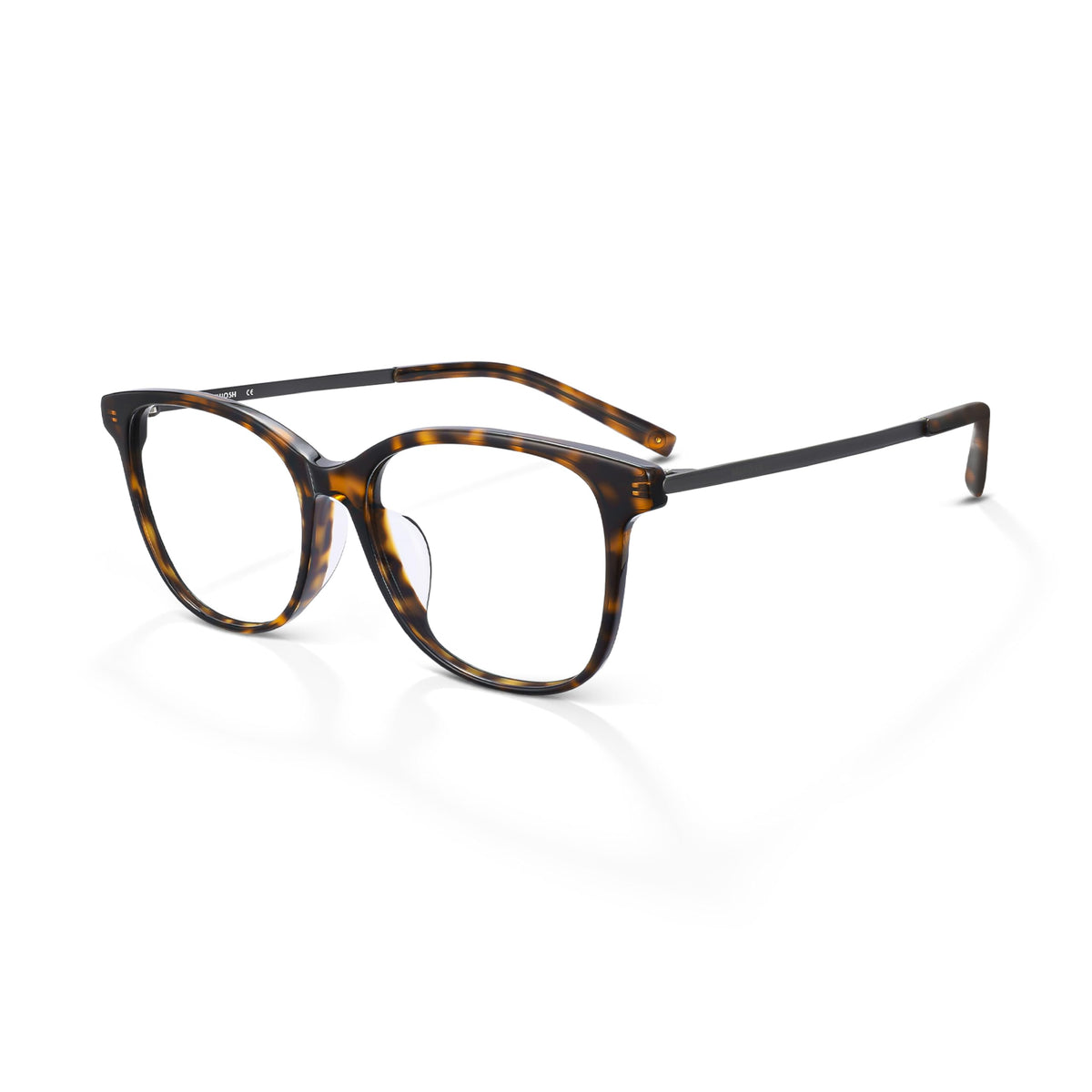
What tortoise shell glasses are made of
Tortoise shell glasses are cellulose acetate, the plant based plastic used for most quality frames, with the pattern laid into the block rather than printed on the surface. The name is a leftover: real shell from the hawksbill sea turtle was used for spectacle frames and combs until the trade was banned in the twentieth century, and the look was so established by then that the acetate version kept the name. No tortoise frame on sale today is shell, and a seller who says otherwise is wrong or selling something illegal.
Acetate is the better material for a frame anyway. Because it is cut from a block, the pattern runs through the full thickness and shows on the edges and the inside of the temples, not only the front. It polishes to a deep gloss, it takes a bend when warmed, and it is light enough for a full rim frame worn all day. The acetate glasses guide covers the material in detail; tortoise is acetate in its best known colourway.
The three tortoise shades
Brands name their colourways differently, but tortoise comes in three families, and the shade matters more than the shape when you are choosing glasses.
- Classic or dark tortoise. Deep brown and black mottle with small amber windows. From across a room it reads as very dark brown, almost black, and it is the most versatile shade: it does everything a black frame does with a warmer, softer edge. Most tortoise glasses in the world are this shade.
- Honey or amber tortoise. The amber dominates, the dark patches are smaller and sparser, and the frame reads as golden or reddish brown. It is lighter and more visible on the face, which is the point: it is the shade to choose when a black or dark frame looks too heavy or too severe.
- Blonde tortoise. The palest version, pale amber with light brown flecks, sitting between a honey tortoise and a clear frame. It reads as the most current and the least formal.
The same frame in dark tortoise and in honey tortoise looks like two different pairs. When a frame comes in more than one tortoise colourway, choose the shade first and the shape second.
Who tortoise glasses suit
Almost everyone, which is why the pattern has lasted. The useful question is which shade. Dark tortoise suits cooler skin tones, dark hair, and anyone who would wear black glasses but finds them hard against the face; it is also the safer office choice. Honey and amber tortoise suit warm and golden skin tones, light brown, red and blonde hair, and anyone whose black frames look severe or whose face is fine featured. Blonde tortoise suits pale and warm colouring and a wardrobe with light colours in it.
A quick test at the mirror: hold the frame to your face and look where the rim meets the skin at the temple. Dark tortoise should sharpen the face; honey tortoise should warm it. If a dark tortoise frame makes you look tired, you want honey; if a honey frame disappears against your skin, you want dark.
Which frame shapes carry it
Tortoise is a finish, not a shape, so the shape rules still apply and the face shape guide is the place to settle the shape first. Two things change with the pattern.
Tortoise softens whatever shape it is on. A square frame in black is a hard, graphic line; the same frame in tortoise is still square but reads as less severe, which is why a square tortoise frame suits more faces than a square black one, and why tortoise is the first finish to try on a square face, as the glasses for a square face guide explains. The pattern also draws the eye, so an oversized tortoise frame reads larger than the same frame in black and a small tortoise frame reads as detail. On a heart shaped face, where the frame should stay thin at the top, a honey tortoise in a round or panto shape keeps the brow quiet; the glasses for a heart shaped face guide covers the rest.
The shapes most associated with the pattern are the round and panto frames of the early twentieth century and the cat eyes of the middle of it, because tortoise acetate is where those shapes started. Rectangles and square rounds in tortoise are the modern office standard. Thin metal frames cannot carry the pattern; where a metal frame is sold as tortoise, the pattern is usually an acetate front or acetate temple tips on a metal structure, which is a good combination because it keeps the weight down.
Tortoise with your hair, skin and clothes
Because the pattern is a mix of browns, it pairs with the colours around it more easily than any solid frame. Dark tortoise goes with black, navy, grey and white as readily as a black frame and with brown and camel better. Honey tortoise goes with cream, camel, olive and denim and lifts a dark outfit. The one pairing to think about is red: a strong red lipstick or a red top next to a honey or amber tortoise can read as too warm, and dark tortoise is the safer shade there.
Caring for tortoise glasses
The pattern is in the material, so a surface scratch does not remove it, but acetate dulls with sweat, skin oil, sunscreen and heat, and a dull tortoise frame loses the depth that makes the pattern work. Wipe the frame, not just the lenses, with a soft cloth and a drop of mild soap in lukewarm water, dry it, and keep it out of a hot car. A frame that has gone dull can usually be brought back by a shop with a polishing wheel. Adjustments follow the acetate rules in the how to tighten glasses guide: warm the temple under warm water before bending it, never bend it cold, and never bend the front.
Fit matters for the finish too. A frame that slides down the nose rubs its bridge against skin and sunscreen all day, which is where tortoise acetate dulls first. The how glasses should fit guide has the checks; many of our frames are cut for a lower nose bridge so they stay where they sit, and the low bridge fit eyeglasses collection lists them.
MUJOSH tortoise shell glasses
Two frames in the eyeglasses collection come in a tortoise colourway, and both are acetate fronts.
- Halo in DTD: an amber tortoise on a lightweight rounded retro frame with adjustable nose pads, $119. The honey shade on the shape the pattern started with, and the one to try if dark frames read heavy on you.
- Beta Pitot in HTT: a dark tortoise acetate front on a square round frame with beta titanium temples and a low bridge fit, $135. The classic shade on a modern shape, with the weight kept down by the metal temples.
The rest of the acetate range, in solid colours and translucents, is in the acetate frames collection.
Shop the frames in this guide
Tortoise acetate in the MUJOSH optical range.


The bottom line
Tortoise shell glasses are acetate with the pattern in the material, in three shades: dark, honey and blonde. Dark tortoise does what black does with a softer edge; honey warms a face that black makes severe; blonde is the current, casual shade. Pick the shade for your colouring, the shape for your face, keep the frame out of the heat and wiped clean, and it will outlast whatever trend brought you to it.
If tortoise feels too present, the opposite choice is a clear frame; the clear frame glasses guide covers who it suits.
If you are choosing between tortoise and black, the black frame glasses guide covers who black suits and when it is too much.
Tortoise is one of the two colours that suit nearly everyone; the what colour glasses should I get guide explains when to pick it over black or crystal.
Frequently asked questions
What are tortoise shell glasses made of?
Cellulose acetate, a plant based plastic, with the mottled pattern laid into the block rather than printed on. Real tortoise shell has not been used in eyewear since the trade was banned, and the name stayed with the acetate look.
Who looks good in tortoise shell glasses?
Almost everyone, because the browns sit close to skin and hair tones. Dark tortoise suits cooler colouring and anyone who would wear black; honey and amber tortoise suit warm and golden tones and soften a face that black makes severe.
Are tortoise shell glasses professional?
Yes. Dark tortoise on a rectangle, square round or panto frame is the standard office frame alongside black, and reads warmer and less severe. Honey and blonde tortoise are more casual.
Are tortoise shell glasses still in style?
They are the one frame finish that has never gone out, because the pattern dates from the earliest spectacle frames and has been reissued in every era since. Dark tortoise on a classic shape is the safest version; honey and blonde follow fashion more closely.