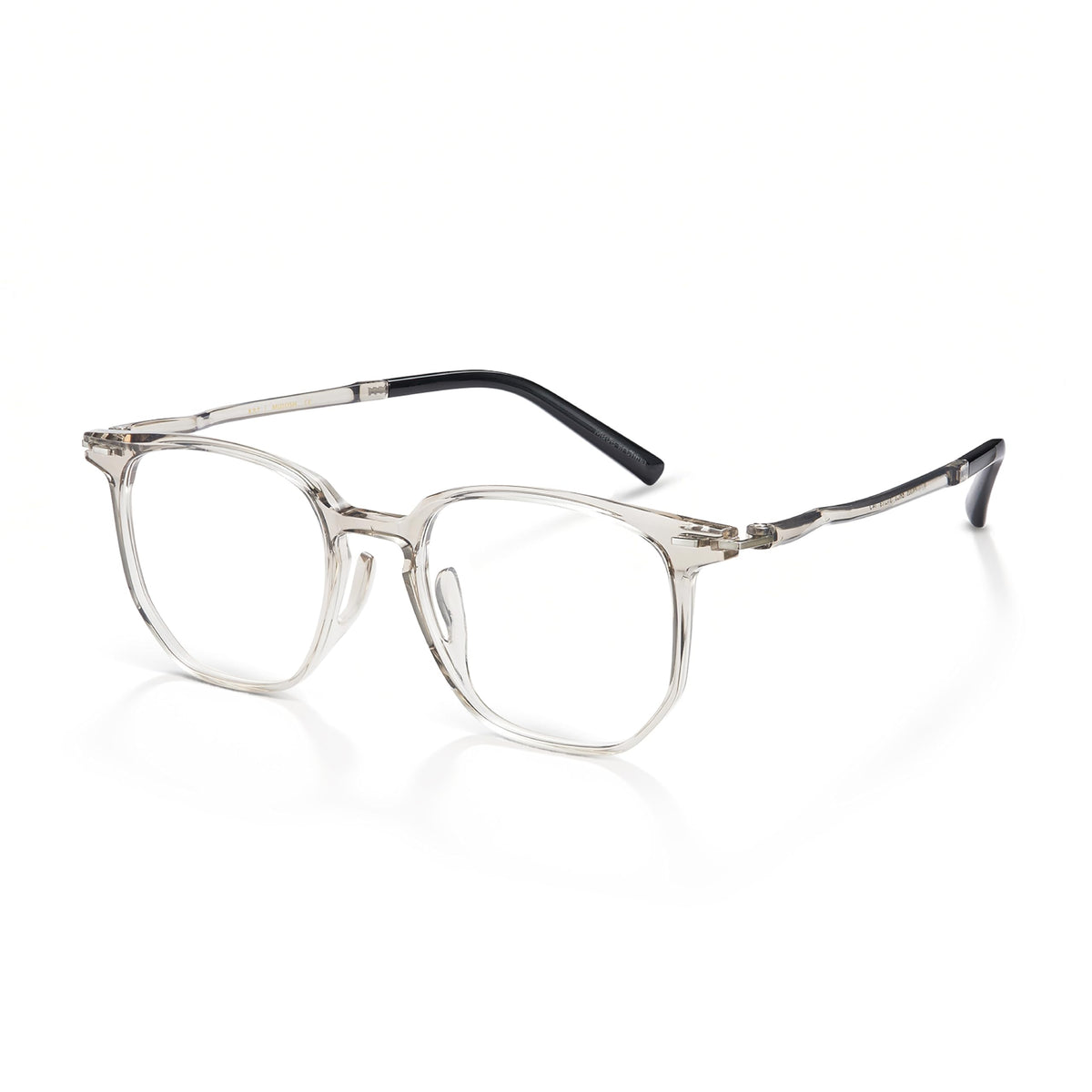
What Ultem actually is
Ultem is a brand name for polyetherimide, a high performance thermoplastic made by SABIC and used in aircraft interiors, medical instruments and, for the last fifteen years or so, eyeglass frames. Three properties make it suit a frame. It is light, lighter than acetate and most injection moulded plastics, so a full frame can be made thin and still feel like nothing. It is strong for its weight, which is why Ultem frames can be cut much thinner than acetate without going fragile. And it keeps its shape under heat: the material is rated for continuous use at temperatures a parked car in summer never reaches, so the frame does not warp on a dashboard or in a bag left in the sun.
Ultem is amber in its natural state, so most frames are tinted or coated; the translucent brown and smoke finishes common on Ultem frames come from the material itself. Because it is injection moulded rather than cut from sheet, the shapes are consistent from pair to pair and the hinges are often integrated into the frame.
Ultem vs TR90
TR90 is the other light frame plastic, a nylon based thermoplastic from Swiss maker EMS. The two are often sold as if they were the same thing; they are different polymers with a similar feel.
| Ultem | TR90 | |
|---|---|---|
| Weight | Very light | Very light |
| Flex | Bends and returns; holds a set adjustment | Bends and returns; more rubbery in the hand |
| Heat | Rated far above anything a car or beach reaches | Softens at lower temperatures than Ultem |
| Look | Thin, often translucent amber, smoke or tinted | Matte or coloured, often a sport look |
| Adjusting | Takes a gentle adjustment and holds it | Springs back toward its moulded shape |
| Typical use | Everyday optical frames, office frames | Sport frames, kids' frames, budget frames |
For a frame that will be worn all day and adjusted once by an optician, Ultem is the better of the two. For a frame that will be sat on, dropped and bent, TR90's springiness is the asset. On a lower nose bridge, both are light enough that weight stops being the reason a frame slides; the bridge cut is, and the glasses keep sliding guide covers that.
Ultem vs acetate
Acetate is the plant based sheet material that classic thick frames are cut from, and the acetate glasses guide explains how to spot the real thing. Against Ultem the trade off is simple:
- Acetate gives you depth of colour, polished thickness and a frame that an optician can heat and reshape. It is heavier, it can warp in a hot car, and thin acetate is fragile.
- Ultem gives you a frame roughly half the weight for the same size, thinner lines, and a shape that stays put in heat. It cannot carry the layered colours or the chunky look of acetate, and it is adjusted gently rather than reshaped.
If the look you want is a thick frame with character, acetate. If the frame has to disappear on your face for twelve hours, Ultem. Titanium sits between the two on weight and above both on price; the titanium glasses guide covers when that extra money is worth it, and the types of glasses frames guide sets all the materials side by side.
Who should choose Ultem
Ultem suits four kinds of wearer. People who wear glasses all day and feel the weight on the nose and ears by evening. People who leave glasses in cars, gym bags and beach bags. People who react to metal frames, because Ultem contains no nickel. And people with a lower nose bridge, because a light frame is the first half of a frame that stays up; the second half is the bridge, and MUJOSH groups the frames cut for that in low bridge fit eyeglasses.
Ultem suits fewer people who want adjustable nose pads: most Ultem frames carry a moulded bridge, so the fit has to be right from the start. The nose pads guide explains what pads change and when a moulded bridge is the better choice.
How to tell Ultem from a cheap plastic
- Weight. Lift it. An Ultem frame feels lighter than it looks; a cheap injection moulded frame does not.
- Flex. Spread the temples gently. Ultem flexes smoothly and returns; brittle plastic resists then creaks.
- Finish. Look at the edge of the frame in the light. Ultem is usually translucent, with a glow through the colour; opaque plastics are not.
- The listing. "Ultem" or "polyetherimide" on the product page. "Lightweight plastic" without a name is usually not Ultem.
Looking after an Ultem frame
Rinse with lukewarm water, wipe with a cloth, and keep solvents and strong cleaners away from the finish. Adjustments are an optician's job: Ultem takes a gentle bend and holds it, but forcing a large change at one point can mark the surface. Heat is not the risk it is with acetate, so a dashboard is survivable, though a hard case is still the right place.
MUJOSH frames in Ultem and other light materials
The MUJOSH Ultem frame is a geometric multi cut shape in lightweight Ultem with a mortise and tenon hinge, in five colorways: the frame to start with if the weight section above describes you. The Alio XZ, a crown panto in MUJOSH's ultra light AQUA material with spring hinges and a low bridge fit, is the other light pick, and the Halo is the acetate choice for anyone who read the acetate section and wants that look. Every frame in the eyeglasses collection lists its material and its measurements under SIZE AND FIT, and the how should glasses fit guide has the seven checks to run when the pair arrives.
Ultem is one of the three materials that make a thin rim strong; the thin frame glasses guide compares it with titanium and slim acetate.
Ultem suits geometric shapes because thin rims make the angles read, and the geometric glasses guide covers that family of frames.
For how Ultem compares with titanium, TR90 and thin acetate on weight alone, the lightweight glasses guide ranks the materials.
Shop the frames in this guide
The three lightweight frames this guide compares.


The bottom line
Ultem is the lightest common frame plastic, the one that holds its shape in heat, and the one that can be cut thin without going fragile. Choose it over TR90 for everyday frames that get adjusted once, and over acetate when weight matters more than a thick, polished look. Check the weight, the flex and the listing before you pay for the name.
Ultem temples bend cold and gently; how to adjust glasses arms explains the method for each material.
Ultem also comes in a clear colourway, and the clear frame glasses guide covers who the look suits and how to keep it from yellowing.
Ultem holds sharp facets without weight, which is why it suits geometric fronts; the hexagon and geometric glasses guide covers the shapes.
Frequently asked questions
What are Ultem glasses?
Glasses with a frame made from Ultem, the brand name for polyetherimide, a high performance thermoplastic. Ultem frames are very light, flexible, strong for their weight and keep their shape in heat, which is why they can be cut thin.
Is Ultem better than TR90?
Different, not better. Both are very light and flexible. Ultem holds an adjustment and tolerates far more heat; TR90 is springier and suits sport and kids' frames. For everyday optical frames worn all day, Ultem is the usual choice.
Is Ultem better than acetate?
Ultem is lighter, thinner and heat stable; acetate is heavier, thicker, richer in colour and can be reshaped by an optician. Choose by what you want from the frame: disappearing weight, or a thick frame with character.
Are Ultem frames durable?
Yes. Ultem is strong for its weight, bends rather than snaps, and does not warp in a hot car. It is adjusted gently rather than reshaped, and the finish can mark under force, so adjustments are best done by an optician.
Are Ultem glasses hypoallergenic?
Ultem contains no nickel and is used for medical instruments, so it is a common choice for people who react to metal frames. Check that any metal parts, such as hinges or pads, are also nickel free if you are sensitive.
Can Ultem frames be adjusted?
Yes, gently. An optician can open or close the temples and adjust the bend behind the ears, and the material holds the new setting. Large changes at a single point are not advised. Frames with a moulded bridge cannot have the bridge changed, so check the fit before buying.