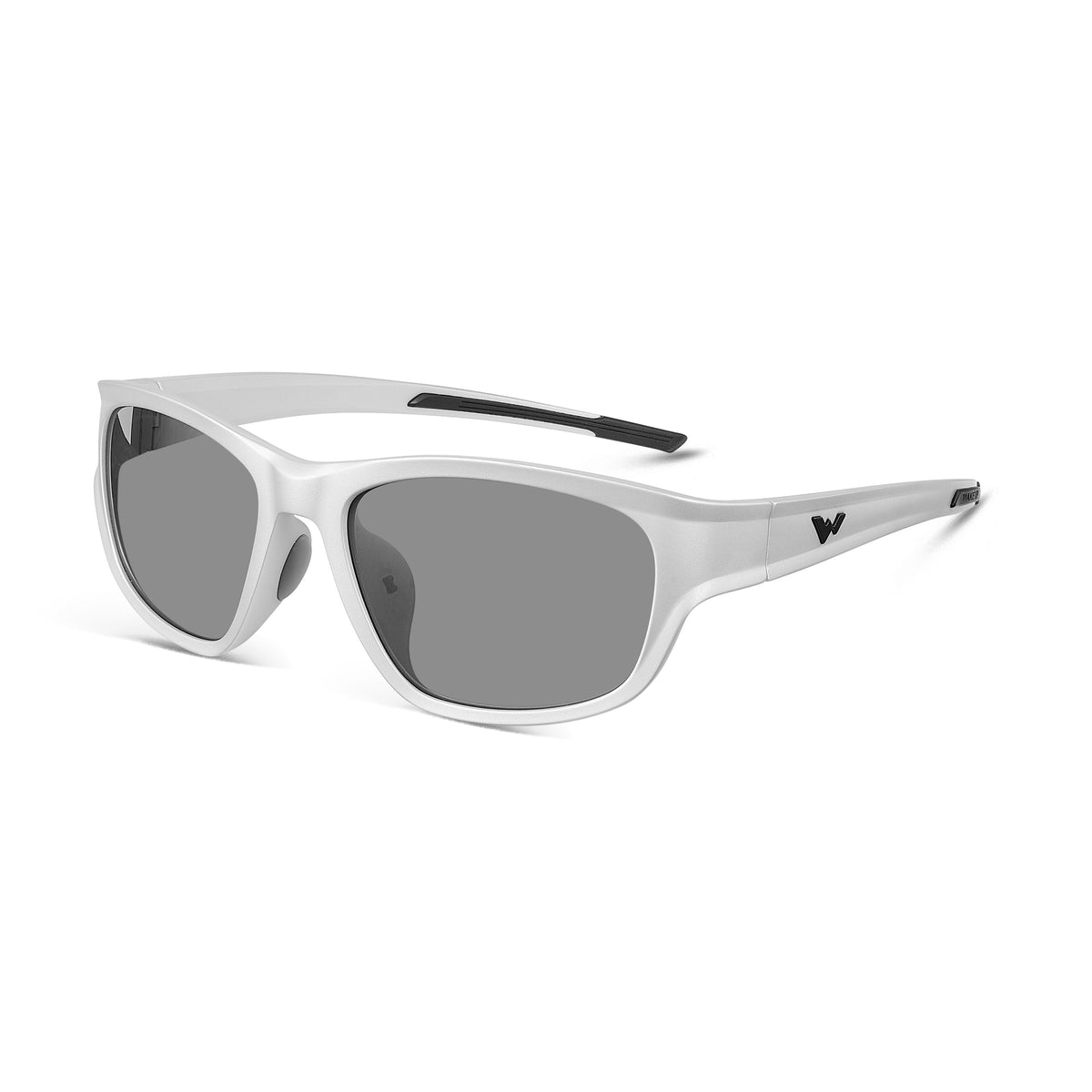
What a round of golf asks of a pair of sunglasses
Golf is slow, long and mostly bright. You spend hours outside, often with no shade, and you look in very different directions: down at the ball, out to the target, up to track the flight, and close at the grass on the green. That leads to a short list.
- A fit that holds when you look down. At address your head tilts forward for several seconds. A frame that slides down your nose in that position becomes a distraction on every shot.
- A clear view through the middle. You need to see the ball and the line without a frame edge in the way, especially when you look down at the ball.
- Lenses that help with contrast. Following a white ball against a pale sky, or picking out subtle breaks on a green, depends more on contrast than on darkness.
- Comfort for a long day. Light frames and soft contact points matter over 18 holes in a way they do not for a short run.
Lens color for golf
Lens color is the choice that changes your round most.
Brown, amber and copper. These are the classic golf tints. They raise contrast between green grass and everything else, which makes the ball easier to pick up in the air and on the fairway, and they help with the light and dark patches that show slope on a green. If you buy one pair for golf, start here.
Rose and red tints. A rose tint brightens the view and sharpens greens and blues. Many golfers like it on overcast days or in the late afternoon, when a dark lens makes the course look flat.
Gray. Gray keeps colors true and cuts overall brightness. It is a good choice for very bright, open courses and for the walk between shots, but it does less for contrast on the green than a warm tint does.
Mirror coatings. A mirror finish reflects some light before it reaches the lens. It helps in strong sun and is partly a look; it does not change how the tint underneath performs.
Polarized or not for golf?
This is the one real debate in golf eyewear, and it is worth understanding before you buy.
Polarized lenses block flat, reflected glare: the shine off water hazards, wet fairways, sand and the cars in the parking lot. On a bright day that makes the course easier on the eyes, and many golfers wear polarized lenses for the full round.
Some golfers take them off on the green. Polarization removes part of the light reflected from the grass surface, and those reflections are one of the clues you use to read grain and subtle slope. Some players find a polarized lens makes a green look flatter than it is. Others notice no difference at all. It is personal, and the only way to know is to try both on the same green.
There are three sensible ways to handle it:
- Wear polarized lenses for the full round if you do not notice a change on the green. You keep the glare cut on every other shot.
- Wear polarized lenses from tee to green, then lift them for the putt. Many golfers already do this.
- Choose a non-polarized contrast lens if reading greens is where you lose shots and you want one pair you never take off.
The guide to polarized vs non polarized sunglasses goes through the trade off in more detail.
Fit: the part that decides whether you keep them on
A pair that slides down your nose at address will end up in your bag by the third hole. Three things help.
- Grip at the contact points. Look for grip coating on the nose area or the temple tips. Several frames in the WAKE UP sports line use grip coating for exactly this.
- A bridge that matches your nose. If your sunglasses rest on your cheeks or slide when you look down, the bridge may sit too high for your nose. Frames cut for a lower nose bridge sit closer and stay level. The low bridge fit sunglasses collection gathers them, and the piece on why glasses keep sliding down your nose explains the cause.
- The address test. Before you buy, take your address position and hold it for five seconds, then look up quickly as if following the ball. If the frame moves, the fit is wrong, whatever the lens.
Shield or two lenses?
A shield, one continuous lens across both eyes, gives an unbroken view through the middle and more coverage when you look up to follow a drive. A two lens frame with a fuller rim looks more like everyday sunglasses, which suits golfers who wear the same pair to lunch after the round. Both work on the course. Choose the shield if coverage matters most, and the two lens frame if you want one pair for the course and the clubhouse.
Frames from the WAKE UP line that suit golf
MUJOSH does not make a golf series. These frames come from the WAKE UP hiking line, which is built for the same things golf asks for: long hours outside, a light frame and a fit that stays put. All four are polarized.
| Frame | Shape | Why it suits golf |
|---|---|---|
| Plantaris 1012 | Wrap | Curves around the face for side coverage; light nylon frame with grip coating |
| Manta 1004 | Rimless rectangle | A light rimless frame with nose pads that also looks right off the course; cut for a lower nose bridge |
| Murray 1024 | Rimless rectangle | A slim rimless frame with nose pads and thin temples that sit easily under a cap; cut for a lower nose bridge |
| Vanta 1025 | Rimless | A minimal rimless frame with nose pads, light enough for a long round; cut for a lower nose bridge |
The full set is in the hiking sunglasses collection.
Golf sunglasses for each situation
| What matters most | Lens to start with | |
|---|---|---|
| Bright, open courses | Glare off water, sand and fairways | Brown or gray, polarized |
| Tree lined courses | Moving between sun and shade | Amber or copper |
| Overcast days and late rounds | Keeping enough light and contrast | Rose or a light amber |
| Reading greens | Seeing grain and subtle slope | Non-polarized contrast lens, or lift your polarized pair |
| Watching from the gallery | All day comfort and glare off the stands | Gray, polarized |
The bottom line
Pick the fit first and the lens second. A light frame with grip coating, and a bridge that matches your nose, will stay on through 18 holes. A brown or amber lens helps you follow the ball and read the course. If polarized lenses change how a green looks to you, lift them for the putt or choose a non-polarized contrast lens. The same frames work for other long days outside too; the baseball sunglasses guide covers the overlap with field sports.
Frequently asked questions
What lens color is best for golf sunglasses?
Brown, amber or copper for most golfers, because they raise contrast between the ball, the grass and the sky. Rose suits overcast days. Gray keeps colors true and suits very bright, open courses.
Are polarized sunglasses good for golf?
For most of the round, yes: they cut glare off water, sand and wet fairways. Some golfers find polarized lenses make greens harder to read, because they remove part of the light reflected from the grass. Try both on the same green, or lift your sunglasses for the putt.
How do I stop my sunglasses slipping when I look down at the ball?
Choose a frame with grip coating at the nose and temples, and a bridge that matches your nose; if your frames rest on your cheeks, a low bridge fit frame will sit closer and stay level. Test by holding your address position for a few seconds.
Can I wear running or hiking sunglasses for golf?
Yes. Golf asks for the same things: a light frame, a fit that stays put and good coverage. A sport frame with grip coating works well on the course, as long as the lens suits the light where you play.