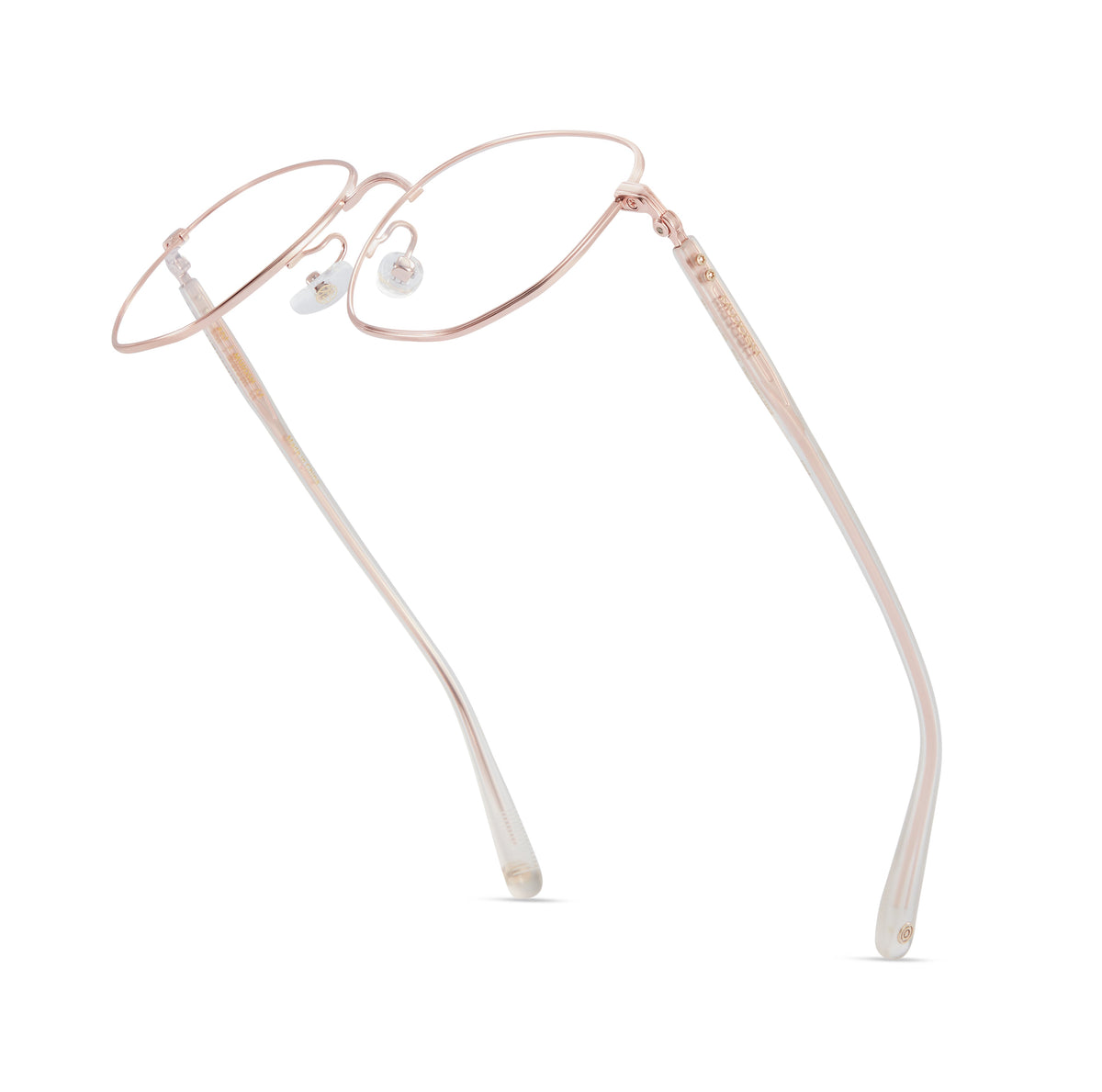
Short answer: the price of a frame covers two kinds of cost. Some you can see and check: the material, the hinges, the hours of cutting and polishing, and the small parts that keep a frame straight for years. Some you can't: the brand name, the design work and the route the frame takes to reach you. Both are real costs, but only the first kind can be checked by looking at the frame, and that is the part worth checking before you buy.
This guide is about the frame itself. It splits the price into its parts, shows which parts a higher price actually buys, and gives you a quick way to tell a well made frame in your hands.
Where the money goes in a glasses frame
The material
Frame materials vary a lot in cost and in how much work they take.
- Acetate is a plant-based plastic made from cellulose. Good acetate frames are cut from layered sheets, shaped, and then tumbled and polished for depth of color, which takes time. Our acetate glasses guide covers what to look for.
- Titanium is light, strong and doesn't react with skin. It is harder to cut, bend and join than ordinary metal, so titanium frames cost more to make. See whether titanium glasses are worth it.
- Ultem and TR90 are light, flexible plastics that are injection molded. They cost less to shape than acetate or titanium and suit very light frames. The Ultem glasses guide compares them.
Hinges, screws and nose pads
The hinge is the part that fails first on a cheap frame. Riveted multi-barrel hinges and spring hinges cost more than a single pin, and they keep the arms from loosening and the frame from losing its shape. Adjustable metal nose pads add parts and fitting time too. Our guide to spring hinge glasses explains what they do.
Finishing
Smooth, rounded edges, even polish inside the rims and clean joints where the bridge meets the lens rims are signs of hand finishing. That work doesn't show on a spec sheet, but you can feel it.
The name on the arm
Many fashion-label frames are made under license: an eyewear company makes them and pays the fashion house to use its name. The license, the design work and the advertising behind the name are all part of the price.
The shop it passes through
A frame sold in a store also pays for the store: rent, trained staff, fittings and adjustments, and stock on the wall in every size. That service has value, especially for a first pair, and it shows in the price.
What a higher price does not buy
A better fit. Fit comes from the three numbers inside the arm and the shape of the bridge, not the price tag. An expensive frame in the wrong size will slide and pinch like any other. Our guides to what the 3 numbers on glasses mean and how glasses should fit show you how to check.
A frame that suits you. Face shape, coloring and style decide that. See glasses for your face shape.
How to tell a well made frame in 60 seconds
- Open and close the arms. They should move smoothly and stay where you leave them, with no grinding or wobble.
- Read the inside of the arm. A good frame prints its size and often its material there.
- Run a finger along the edges. They should feel rounded and smooth, with no sharp seams.
- Look at the joints. Where the bridge and the hinges meet the rims, the join should be clean and even.
- Check the promise. A maker that stands behind its frames offers a warranty and a fair return window.
How MUJOSH keeps the price down
MUJOSH was founded in Shenzhen in 2010 and designs its own frames under its own name. In the United States it sells direct at mujosh.us, which keeps the route to you short. The frames use titanium, acetate and Ultem, with spring hinges on many styles. Every frame comes with 30 day returns and a one year warranty. Browse MUJOSH eyeglasses or the titanium frames.
The bottom line
Glasses frames cost what they do because of material and craft, and because of the name and the route to you. Pay for the parts you can check: material, hinges and finish. Choose the size by the numbers, not the price. For the same question about sunglasses, see why sunglasses are so expensive.
Frequently asked questions
Why are glasses frames so expensive?
Part of the price is the frame itself: material, hinges and hand finishing. The rest pays for the brand name, design, advertising and the store or site that sells it. Only the first part can be checked by looking at the frame.
Are expensive glasses frames worth it?
Only for the parts you can see and feel: a better material, stronger hinges and cleaner finishing. A higher price doesn't give you a better fit. That comes from choosing the right size.
Why do titanium frames cost more?
Titanium is harder to cut, bend and join than ordinary metal, so it takes more time and tooling to make a frame. You get a light, strong frame that doesn't react with skin.
Why do designer frames cost more than other frames?
Many designer frames are made under license. An eyewear company pays the fashion house to use its name, and that fee and the advertising behind the name are built into the price.
How can I tell if a glasses frame is well made?
Open and close the arms. They should move smoothly and hold their position. Check that the size is printed inside the arm, the edges feel smooth, and the joints are clean. Then check the warranty and return window.