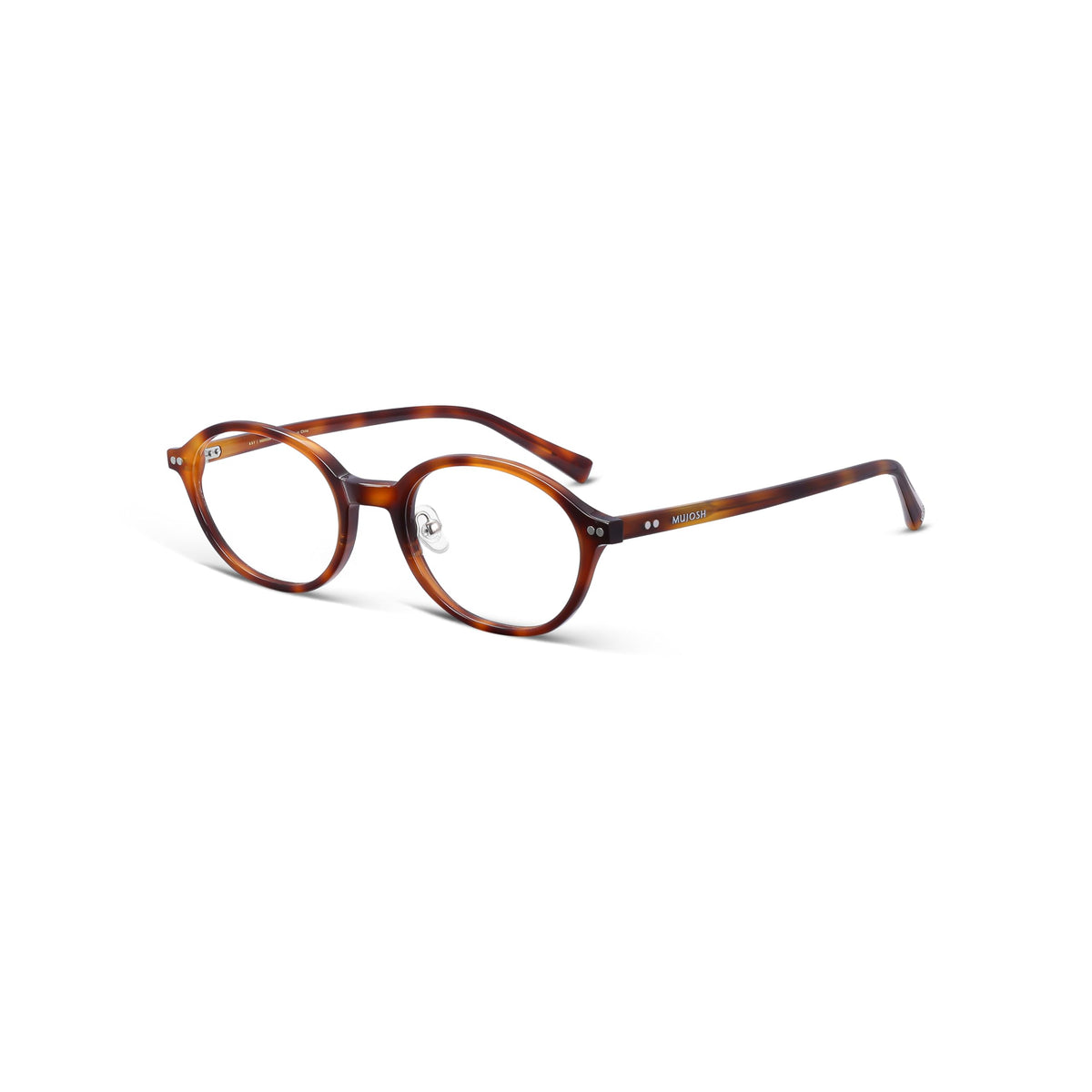
What blue light glasses are
Blue light glasses are ordinary lenses with a coating or tint that absorbs or reflects part of the blue end of the visible spectrum. Clear versions filter a small slice and look normal apart from a faint blue or purple reflection. Amber and yellow versions filter much more and change the colour of everything you look at. The lenses are sold in frames of every kind, so the frame itself is no different from any other pair; the claim lives entirely in the coating.
The idea behind them is that blue light from screens is harmful or tiring, and that filtering it helps. Both halves of that idea have now been tested.
What the trials found on eye strain
The largest independent look at the question is the Cochrane review published in 2023, which pooled seventeen randomised trials of blue light filtering lenses against ordinary lenses. Its finding on eye strain was that the filtering lenses probably made no difference to eye strain from computer work over short periods, compared with lenses that filtered nothing. The trials were small and short, so the review rated the evidence as low certainty, but the direction was consistent: no benefit shown.
The American Academy of Ophthalmology reaches the same conclusion and does not recommend special eyewear for computer use. Its explanation is the useful part: the discomfort people feel after hours at a screen comes from how the screen is used, not from the colour of its light. Blinking drops by roughly half when we concentrate on a display, the eyes dry out, and the focusing muscles hold one distance for hours. A coating does nothing about any of that.
What the trials found on sleep
The sleep claim has a real finding behind it, which is why it lasts. Light in the evening tells the body it is still daytime and delays the release of melatonin, and short wavelength blue light does this more strongly than other colours at the same brightness. Laboratory studies have shown that reading on a bright light emitting screen before bed delays melatonin and makes it take longer to feel sleepy compared with reading a printed page.
The step from that finding to "wear blue light glasses" is where the evidence thins. Small early trials of amber lenses worn in the evening reported better sleep, but the Cochrane review found the sleep results across trials inconsistent and could not say whether the lenses helped. The reason is the dose. A screen at night is one source of evening light among many, and a clear coating filters only a fraction of it. Dimming the screen, turning on the warm night setting, and stopping screens an hour before bed remove far more blue light than a clear lens ever will, and cost nothing. Amber lenses worn for the last hours of the evening are a reasonable experiment for someone who cannot change their screen habits; clear lenses worn all day are not a sleep intervention.
The retina claim
The third promise is that blue light from screens damages the retina over time and raises the risk of macular degeneration. This comes from laboratory work in which cells or animal retinas were exposed to intense blue light. It does not describe screen use. The amount of blue light a phone or monitor emits is a small fraction of what the eye receives from daylight on an ordinary afternoon, and no study has shown that screen use causes retinal damage. The American Academy of Ophthalmology says plainly that blue light from digital devices has not been shown to harm the eye.
Where blue light exposure is genuinely high is outdoors, and the lens that matters there is a sunglass lens that blocks ultraviolet, which is a different band from visible blue. The UV400 sunglasses guide explains what that label means and how to check it. Spending on a blue light coating for indoor glasses while wearing unlabelled sunglasses outside gets the priority backwards.
What the coating costs you
A blue light coating is not free of side effects. Clear versions add a visible reflection on the lens surface, which shows in photos and can bother people who notice it. Stronger tints shift colours toward yellow, which is a problem for anyone who edits photos, chooses paint or reads colour coded charts. Coated lenses also need the same care as any coated lens: the how to clean eyeglasses guide covers what scratches a coating and what does not. None of this is a reason to avoid the coating if you like it; it is a reason not to pay extra expecting a medical benefit.
What actually fixes screen strain
Since the strain is caused by how a screen is used, the fixes are about use.
- Blink and look away. The twenty twenty twenty habit recommended by eye care bodies: every twenty minutes, look at something about twenty feet away for twenty seconds. It resets the focusing muscles and brings the blink rate back.
- Match the screen to the room. A screen much brighter than its surroundings is tiring; so is a bright window behind the monitor. Set the brightness to the room and move the glare.
- Sit at the right distance. An arm's length from a monitor, with the top of the screen at about eye level, keeps the focusing demand steady and the eyelids lower, which slows drying.
- Deal with dry eyes directly. Lubricating drops, a humidifier in a dry office and conscious blinking do more for gritty, tired eyes than any lens.
- Check your vision. Strain that does not lift with the steps above is often an uncorrected or out of date lens power, which only an eye examination will find. Persistent headaches, blurred vision or pain are reasons to see an eye doctor, not to buy a coating.
Is the frame doing its job?
One cause of screen discomfort has nothing to do with lenses or light: a frame that sits wrong. Glasses that slide down the nose during the day put the optical centre of the lens in the wrong place, so the eyes work harder at the end of the afternoon than at the start, and the wearer blames the screen. Lenses that sit too close to the face steam up and smear; a frame that pinches behind the ears gives a headache that gets filed under screen strain.
The how should glasses fit guide lists the seven checks to run, and the glasses keep sliding guide explains the usual cause, a bridge drawn for a higher nose than the one wearing it. If the lenses touch your cheeks when you smile, that is lens tilt, covered in the glasses touching cheeks guide, and adjustable pads, explained in the nose pads guide, fix a good share of sliding frames without a new pair.
Where MUJOSH stands
MUJOSH sells frames and, through Customize Lens on each eyeglasses page, the blue light filtering lens described below; this guide takes no position on the coating beyond the evidence above. What MUJOSH does claim is the fit. Many of its frames are cut for a lower nose bridge as the default, so the frame sits where it was designed to sit for the whole working day, and that is the part of screen comfort a frame can control. The eyeglasses collection lists the material and the three frame measurements under SIZE AND FIT on every product page, the low bridge fit eyeglasses collection groups the frames cut for that bridge, and the types of glasses frames guide helps choose a material if weight on the nose is part of the problem.
What MUJOSH's blue light lens does
MUJOSH's lens range includes a blue light filtering lens. The catalogue describes it in terms worth repeating plainly, because they are the terms a buyer should hold any such lens to. The filter works on the short wavelength end of visible blue, the band from 415 to 455 nanometres, and leaves the rest of the visible spectrum, 455 to 780 nanometres, to pass through, so colours stay as they are and the lens stays clear rather than yellow. The lens is built to China's blue light protection standard for spectacle lenses (GB/T 38120-2019), which sets limits on how much of each band a lens may remove, and it carries an anti reflective coating and a hard coat like any other coated lens.

None of this changes the evidence above. A lens that filters a narrow band cleanly is a better made lens than one that tints everything yellow, and it avoids the colour shift described earlier; it is still not a treatment for tired eyes, and the catalogue does not claim it is. On mujosh.us it is ordered with the frame: choose Customize Lens on an eyeglasses product page, then the Blue Light Filtering lens type.
Screen comfort has more to do with reflections than with blue light; the anti reflective coating guide covers that side.
The bottom line
Blue light glasses have not been shown to reduce eye strain, their effect on sleep is unproven and small next to dimming the screen and stopping earlier, and screens do not emit enough blue light to damage the retina. If the reflection does not bother you and the price is the same, there is no harm in the coating. If you are paying extra to fix tired eyes, spend it on an eye examination and a frame that stays put instead.
The coating that reduces screen reflections is a separate thing from a blue light filter; the anti glare glasses guide keeps the two apart.
A blue light lens is one of the lens types that start clear; the clear lens glasses guide covers the others and how to choose the frame.
Frequently asked questions
Do blue light glasses reduce eye strain?
The trials pooled in the 2023 Cochrane review found no difference in short term eye strain between blue light filtering lenses and ordinary lenses. Screen strain comes from reduced blinking, dry eyes and holding focus at one distance, which a coating does not change.
Do blue light glasses help you sleep?
Evening light delays melatonin, and blue wavelengths do so most strongly, but trials of the lenses gave inconsistent results. Dimming the screen, using the warm night setting and stopping screens an hour before bed remove more blue light than a clear coating; amber lenses in the evening are a reasonable experiment, clear lenses worn all day are not.
Does blue light from screens damage your eyes?
No study has shown that it does. The retina claim comes from laboratory exposure far more intense than any screen, and the American Academy of Ophthalmology states that blue light from digital devices has not been shown to harm the eye. Daylight is the large blue light source, and sunglasses that block ultraviolet are the lens that matters outdoors.
Are blue light glasses worth buying?
Only if you like them and the price is the same as a plain lens. The coating adds a reflection and can shift colours, and there is no proven medical benefit. Tired eyes at a screen respond better to the twenty twenty twenty habit, screen brightness matched to the room, an up to date eye examination and a frame that stays in place. If you do choose one, prefer a clear lens that filters a stated narrow band over an amber tint, so colours stay true.