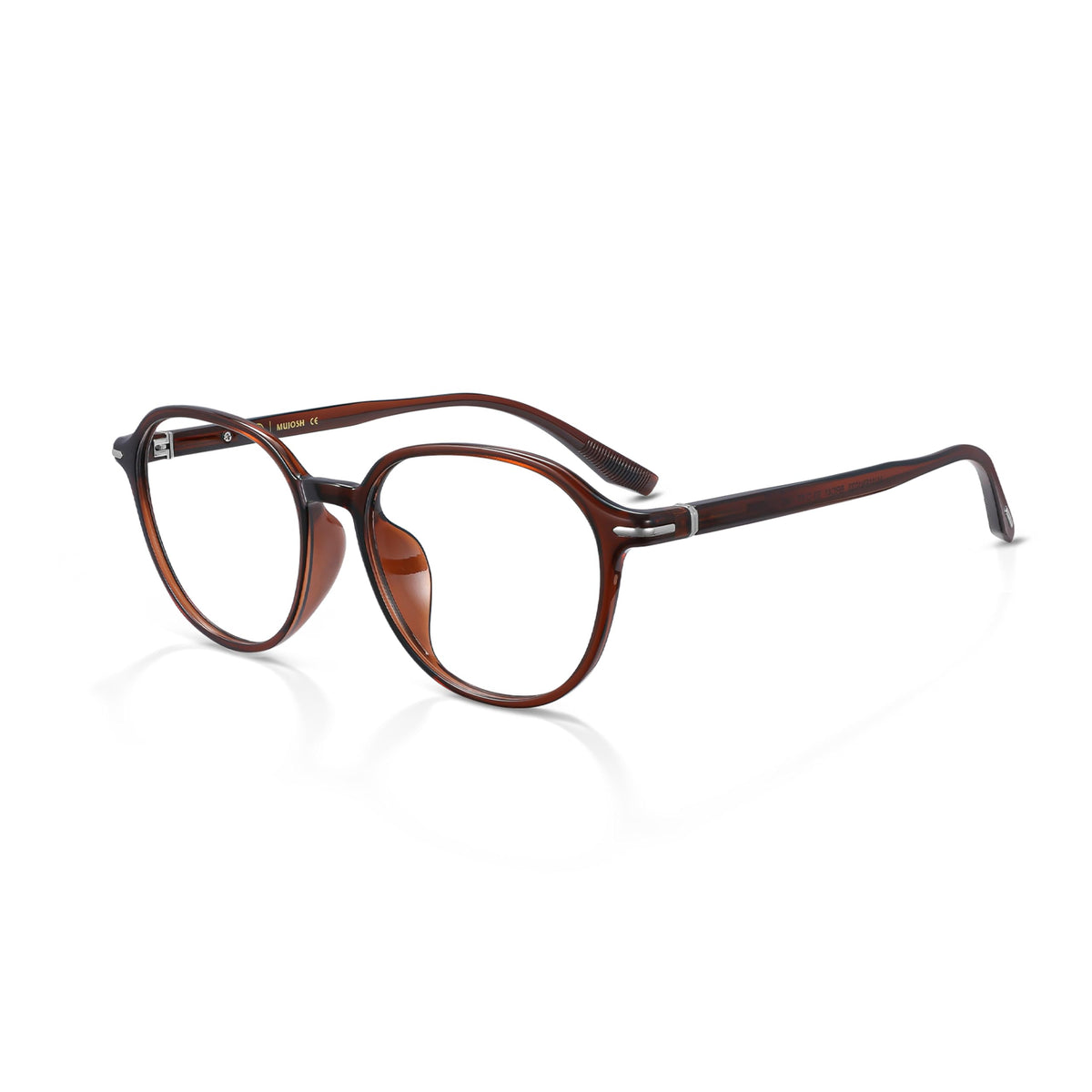
What "Korean glasses" means
The phrase describes a style that became common in Korea in the 2010s and spread through K-pop, K-drama and the people who dress like them. The frames are deliberately understated: wire thin metal or translucent acetate, lens shapes borrowed from the 1920s and 1960s (round, oval, panto, crown panto), and colors that stay close to gold, silver, black or clear. Many people wear them as an accessory with plain lenses, which is why the style reads as fashion first.
What is less obvious is that the frames were designed for the faces that wear them. East Asian faces, on average, have a lower nose bridge and flatter cheekbones than the European faces most Western frame patterns were drawn for. Korean makers cut their frames for their own customers, so the bridge sits lower, the nose pads sit further forward, and the lens is shallow enough to clear the cheek. The look and the fit arrived together.
The five traits that define the look
- Thin rims. Metal rims as thin as wire, or acetate thin enough to be translucent. The frame outlines the eye rather than framing it.
- A small lens. Round, oval or panto shapes that cover the eye and little more. The small lens keeps the frame light and stops it dominating a small or narrow face.
- A low, pad supported bridge. The bridge sits low between the eyes and the frame rests on adjustable nose pads rather than on a fixed saddle. This is the fit trait, and it is the one that matters most.
- Light weight. Titanium, thin stainless steel and modern nylon or polymer frames keep the whole pair light, which is what lets a thin frame on nose pads stay put all day.
- Quiet color. Gold, silver, gunmetal, black, clear, and the occasional tortoise or honey acetate. The frame is meant to complement the face, not announce itself.
If a frame has three of these five, people will call it Korean style. If it has the third, it will probably fit a lower bridge.
Why the style fits a lower nose bridge
A standard frame carries its weight on a fixed bridge that assumes there is a nose ridge to rest on. When the bridge of the nose sits low or flat, that frame rests on the cheeks instead, tilts forward, and slides. The usual symptoms are lenses that touch the cheeks when you smile, a frame that creeps down every few minutes, and marks on the cheekbones rather than the nose.
Korean style frames avoid all three by design. The nose pads carry the weight and can be bent inward or outward to meet the nose where it is. The bridge sits low enough that the pads reach the nose without the frame dropping. And the shallow lens leaves room between the lower rim and the cheek, so the frame can sit close to the face without resting on it. US brands sell the same pattern under the name low bridge fit; the Korean style arrived at it first because its home market needed it.
If you are not sure whether this describes your face, the low nose bridge guide gives three checks you can do in a mirror in two minutes.
Who the style suits, and who should adjust it
Small and oval faces wear the classic version as drawn: thin round or oval lenses, gold or silver metal, nose pads. The scale matches.
Round faces do better with the oval or crown panto shapes than with a true circle, because a round lens on a round face repeats the curve. A slight straight line across the top of the lens adds the structure the face lacks. The face shape guide covers the logic.
Wide faces need the same traits in a wider frame. The thin rims and nose pads still help; a lens that is too small leaves the frame looking pinched. Look for a wider version of the shape, not a different style.
Thicker lenses show their edges in a thin rimless or wire frame. A thin acetate rim in the same shape hides the edge while keeping the look.
Anyone who wants the glasses to disappear is the core customer. The style exists for people who want to wear frames all day and forget them.
How to get the look from a US store
The style is easy to copy badly, usually by buying a thin round metal frame with a standard fixed bridge and discovering it slides. Use this checklist instead:
- Fit first. Look for a frame described as low bridge fit, with nose pads. That one line decides whether the pair stays on your nose. MUJOSH groups its frames with that pattern in the low bridge fit eyeglasses collection.
- Then the shape. Round, oval, panto or crown panto. The oval glasses collection covers the softest version of the look; the types of glasses frames guide explains the names.
- Then the material. Thin metal for the classic version, with titanium the lightest and most flexible option; the titanium glasses guide explains what you pay for. The metal frame glasses collection lists the metal frames in one place. Clear or honey acetate gives the same style with a little more presence.
- Then the detail. Spring hinges and adjustable nose pads are worth having. Both let a light frame be fitted to your face rather than the other way round.
MUJOSH frames in this style
MUJOSH has designed its own frames in Shenzhen since 2010, and many of them are cut on a low bridge pattern, so the style is already in the range rather than imported into it. Four that carry the traits above:
- The Alio XZ is the closest to the classic look: a crown panto shape in an ultra light material, with spring hinges and a low bridge fit, in three colorways.
- The Beta Pitot is a square round shape with beta titanium temples and a low bridge fit, in two colorways, for the version of the style with a little more line.
- The Saga 1001, from the WAKE UP line, is a rimless rectangle with metal temples and nose pads, cut for a lower nose bridge, in four colorways: the minimal end of the style, where the frame almost disappears.
- The Trendy Diamond is a diamond cut cat eye in acetate with a low bridge fit, in two colorways, for the acetate version of the look with a feminine line.
Each product page lists the frame's measurements under SIZE AND FIT, so you can compare a pair against glasses you already own.
Shop the frames in this guide
The frames closest to the look, all cut for a lower nose bridge.


The bottom line
Korean glasses are a style defined by thin rims, a small lens, a low pad supported bridge, light weight and quiet color. The first, second and fifth traits are taste. The third and fourth are fit, and they are why the style sits well on a lower nose bridge. Buy the fit first, then pick the shape and material that match your face.
The fit behind the style has its own buying guide: glasses for an Asian nose bridge, with the five frame traits and the MUJOSH frames cut that way.
Many of the thin, light frames in this style are made from Ultem; the Ultem glasses guide explains the material and how it compares with acetate.
The same bridge cut carries over to the sun lens: the low bridge fit sunglasses collection has the thin metal and clear acetate shapes the style is built on.
Searches for Korean eyeglasses and Korean style glasses mean the same thing: a thin, light frame in a round, panto or narrow rectangle shape, cut on a low bridge pattern so it sits where it was drawn to sit. The frames named above are the ones here that match it.
The panto is the shape at the heart of the thin-frame look; the panto glasses guide covers it on its own.
The sunglasses side of the look is the opposite of this one, big where this is small; the Korean sunglasses guide covers its five traits and seven pairs.
The craft cousin of this look, titanium first and unbranded, is in the Japanese glasses guide.
Frequently asked questions
What are Korean glasses?
A style of eyewear that came out of Korean street fashion and K-drama: thin metal or translucent acetate frames with small round, oval or panto lenses, light weight, quiet colors, and a low bridge supported by nose pads. It is a style, not a brand.
Why are Korean glasses so thin and light?
Because the style is meant to complement the face rather than frame it, and because a light frame on nose pads stays in place on a lower nose bridge. Titanium, thin steel and modern polymer materials make the thinness possible without losing strength.
Do Korean glasses fit a low nose bridge?
Usually yes. Korean frames were designed for faces that often have a lower bridge, so the bridge sits low, the nose pads sit forward, and the lens is shallow enough to clear the cheek. US brands sell the same pattern as low bridge fit.
Can I wear Korean style glasses without needing them?
Yes. Many people wear the style with plain clear lenses as an accessory, which is part of how it spread. Choose the fit the same way, because a frame that slides is annoying whether or not the lenses do anything.
Which face shape suits round Korean glasses?
Oval and small faces wear the round version best. Round faces do better with an oval or crown panto lens that adds a straight line, and wide faces need the same traits in a wider frame.
Where can I buy Korean style glasses in the US?
Look for a frame that states low bridge fit and nose pads, then choose a round, oval or panto shape in thin metal or clear acetate. MUJOSH's low bridge fit eyeglasses collection lists the frames in its range that are cut on that pattern.