What makes a face long
The face is noticeably longer than it is wide, usually by half again or more. The forehead is tall, the cheeks are long and fairly straight, and the chin is deep. If the jaw is squared and the sides run straight, the face is rectangular; if the jaw curves, it is oblong; both take the same frames. A face that is longer than wide but with balanced, softly tapering proportions is oval, which takes almost anything, and the glasses for an oval face guide covers it. The face shape guide has the mirror method; the test for long is that the face looks taller than it is wide even with the hair pulled back.
The rule: width, depth, and a break in the length
A long face wants three things from a frame. Width: the frame should reach the full width of the face or very slightly past it, because a narrow frame makes the face look longer by contrast. Depth: the lens should be tall, as deep as it is wide or close to it, so the frame covers more of the length and breaks it up. And a horizontal line: a strong top rim, a brow bar or a decorative temple draws the eye across the face rather than down it. The one thing a long face does not want is a frame that sits high and shallow, which leaves most of the face below it and makes the length obvious.
The best frames for a long face
- Tall square and square round. A square lens with real depth adds width and covers length at once, and the straight top line gives the eye a horizontal to rest on. A square round, with rounded corners, does the same with a softer read. These are the first frames to try.
- Oversized and wide frames. On a long face oversized works, because width is what the frame is adding. A wide, deep frame in a medium rim shortens the face more than any other single choice. The limit is the width check below; past the temples it reads as too big rather than balancing.
- Round and panto with depth. A round lens adds curve and, if the lens is large, depth. On a long face a bigger round frame works better than a small one, which is the reverse of the advice for a round face.
- Aviator shaped eyeglasses. The teardrop lens is deep, the double bridge adds a horizontal line, and the shape covers length without weight.
- Frames with decorative or contrast temples. A temple that catches the eye, a colour, a metal detail or a wider arm, draws attention outward across the face. On a long face that detail does real work.
The two that lengthen it further
Narrow, shallow rectangles. The thin office rectangle that suits a round face is the worst frame on a long one: wide and shallow, it sits high, leaves the length below it untouched and makes the face look longer. If you want a rectangle, choose a deep one with a tall lens.
Small frames and frames that sit high. A small frame leaves most of the face uncovered and a frame set high on the nose puts all the length below it. Frames with low set bridges or a lens that comes down toward the cheekbone do the opposite and are the ones to look for.
Rim and colour
A long face can take more rim than most. A medium or bold acetate rim adds the width the face wants, and a two tone frame with the colour along the top adds the horizontal line. Dark colours and strong patterns both work; tortoise is the natural choice because it adds presence without hardness, and the tortoise shell glasses guide covers the shades. Very thin, pale or rimless frames disappear on a long face and leave the length to speak for itself; keep them for a wide, deep lens shape if you want them at all.
Width and height: the checks that decide it
Stand at a mirror and look straight ahead. The outer edge of each lens should sit level with the side of the face, where the temple arm begins its run back, or very slightly past it; on a long face a frame that stops inside the face is the common mistake. Then look at depth. The top rim should sit just under the brow and the lens should come well down toward the cheekbone, deeper than on any other face shape, without resting on the cheek. A lens that is as deep as it is wide is the target.
The how glasses should fit guide has the full seven checks, and the glasses measurements guide shows where to read the width, bridge and lens height on your current frame so you can compare the next one; on a long face the lens height number is the one to watch.
Fit: why the frame has to sit where it was drawn to sit
A deep frame only shortens a long face if it sits at the height the designer intended. A frame that sits too high leaves the length below it; a frame that slides down the nose drops the eyes to the top of the lens and makes the face look even longer, which is the worst case for this shape. On a lower nose bridge the fix is a frame cut to sit lower and pads set to hold it, which the low bridge fit eyeglasses collection carries; many of our frames are made that way, and on a long face the bridge decides whether the depth of the lens does its job.
Long face glasses for women and men
The shapes hold for both. On a man's long face a deep square, a square round or an aviator shaped frame in a medium dark rim adds width without drawing attention to the shape; a bold brow bar helps. On a woman's long face an oversized round or square round, a deep cat eye or a wide frame in tortoise or a strong colour adds the width and the horizontal line. In both cases: as wide as the face, as deep as it is wide, sitting at the right height.
MUJOSH frames for a long face
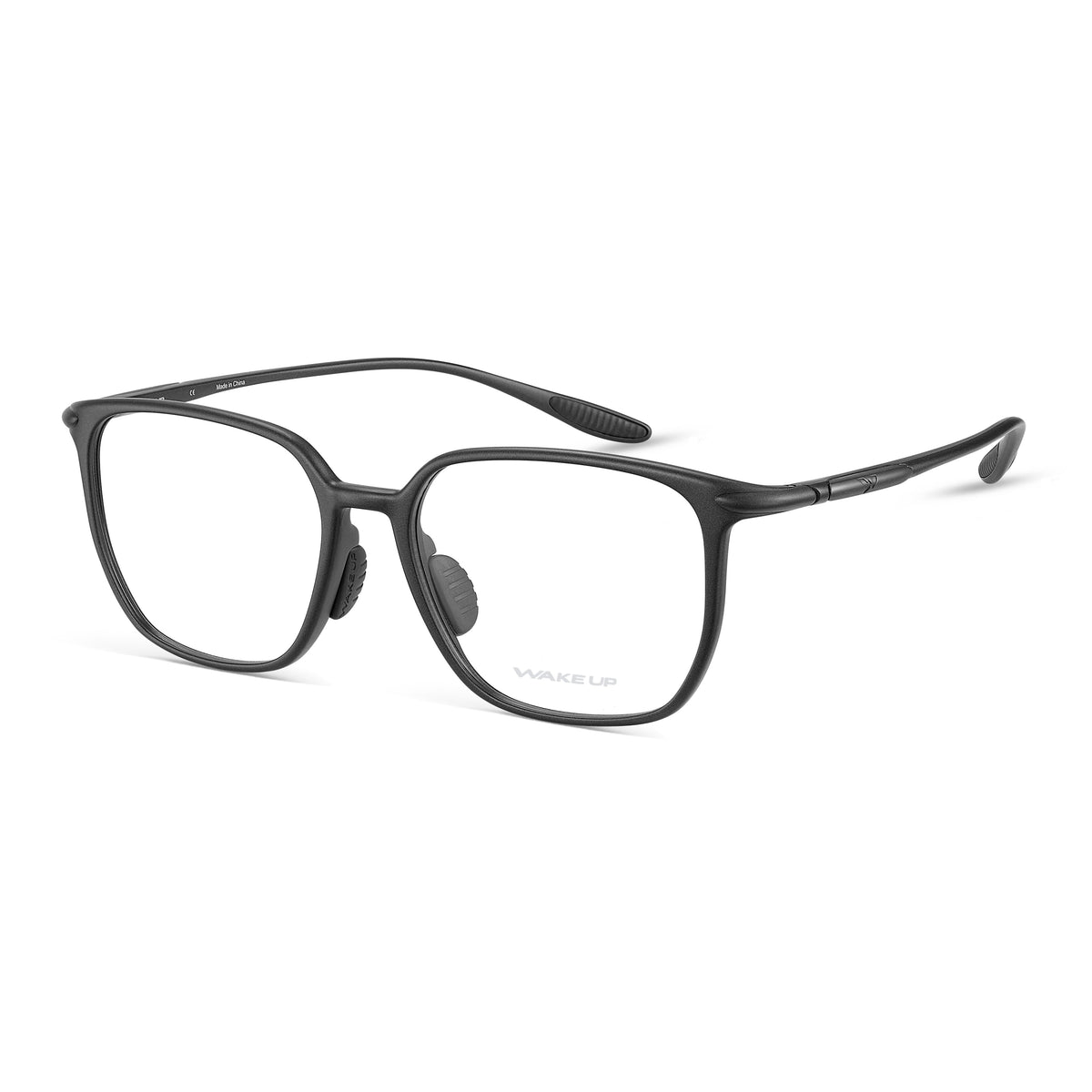
Four frames from the eyeglasses collection cover the shapes above. The Beta Pitot is a square round frame with beta titanium temples and a low bridge fit at $135, the square round option. The Kubo 1062 from the WAKE UP line is a square nylon frame cut for a lower nose bridge in three colorways at $135, the deep square. The Halo is a lightweight retro frame in a rounded shape with adjustable nose pads at $119, the round option, and the pads let you set the height. The Trendy Diamond is a diamond cut cat eye in acetate with a low bridge fit at $99, the lifted horizontal line.
One shape that adds width without adding height is the wide, shallow oval; the oval glasses guide covers the proportion that works on a long face and the MUJOSH frames that carry it.
The bottom line
A long face wants a frame that is as wide as the face, as deep as it is wide, and sitting at the right height, with a horizontal line in it somewhere. Deep squares, square rounds, oversized frames, large rounds and aviator shapes do that; narrow shallow rectangles and small high set frames do the opposite. Take more rim and more colour than you think, check the width against the temples and the depth against the cheekbone, and let the bridge hold it where it belongs. The round face guide is the one to read if your face is as wide as it is long.
For the sun version of this shape, the sunglasses for a long face guide ranks the oversized squares, aviators and rounds that add width.
Frequently asked questions
What glasses suit a long face?
Deep square and square round frames, oversized and wide frames, large round and panto frames, and aviator shaped eyeglasses. All of them add width and depth and give the eye a horizontal line, which shortens a face that is longer than it is wide.
Which glasses should a long face avoid?
Narrow, shallow rectangles, small frames, and frames that sit high on the nose. They leave most of the face below the lens and make the length obvious. Very thin or rimless frames disappear and do nothing for the shape.
Is an oblong face the same as a long face?
Yes for frame advice. Oblong means the jaw curves and rectangular means it squares off, and both are clearly longer than they are wide, so both take the same deep, wide frames.
Should glasses for a long face be big?
Bigger than for most faces. The frame should reach the full width of the face and the lens should be as deep as it is wide. Oversized works on a long face as long as the frame stops at the temples and sits under the brow.
What glasses suit an oblong face?
An oblong face is a long face with straight sides, and the rules are the same: a frame with depth, so the lens adds width at the cheekbone and breaks the length; a round, a panto or a deep square-round rather than a shallow rectangle, which makes the face longer; and a frame that sits at the brow rather than low on the nose. A decorative or contrasting temple draws the eye sideways, which helps. In the MUJOSH range Halo and Beta Pitot have the most depth.