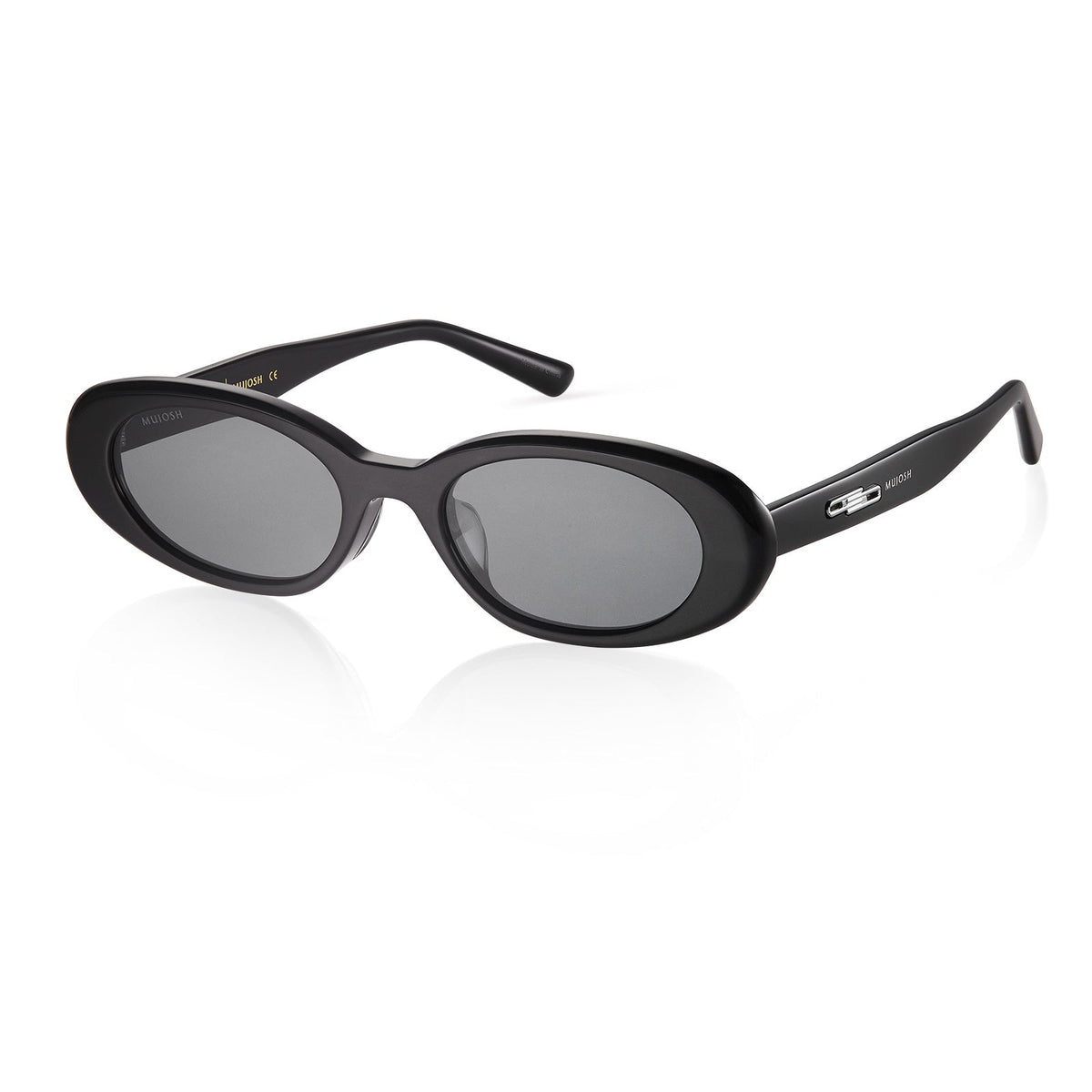
Short answer: yes, but only partly, and it depends on the lens color. Every tinted lens cuts some blue light, because it cuts visible light in general. Brown, amber, copper and yellow lenses filter the most blue. Gray lenses cut all colors about evenly. Blue and purple lenses let the most through. A UV400 label does not tell you anything about blue light.
So if your question is whether sunglasses protect you from blue light outdoors, the answer is that most of them reduce it and some reduce it a lot. If your question is whether you should wear sunglasses at a screen, the answer is no. This guide explains the difference and how to pick a lens if blue light is the reason you are shopping.
What blue light is, and where it comes from
Blue light is the part of visible light with the shortest wavelengths, roughly 400 to 500 nanometers. It sits just above ultraviolet, which ends at 400 nanometers. Unlike UV, you can see it: it is what makes a clear sky look blue.
By far the biggest source of blue light in daily life is the sun. Screens, LED bulbs and phones give off blue light too, but at a small fraction of what you get from a few minutes outdoors in daylight. That is why the screen question and the sunglasses question have different answers.
UV400 is not a blue light rating
UV400 means the lens blocks light up to 400 nanometers, which covers UVA and UVB. Blue light starts above that line. A UV400 lens can be very dark brown and filter a lot of blue, or light gray and filter very little; the label says nothing either way. The UV400 sunglasses guide explains what the label does guarantee, and it is still the first thing to check on any pair.
Polarization doesn't block blue light either. A polarized lens cuts glare reflected off flat surfaces such as water, roads and car hoods. It does that whatever the tint, so a polarized lens filters blue only as much as its color does. The polarized vs non-polarized guide covers when that glare cut is worth having.
How much blue light each lens color blocks
Lens color is the part that decides it. As a rough guide, from most blue filtered to least:
| Lens color | Blue light | What it looks like through the lens |
|---|---|---|
| Amber, orange, yellow | Filters the most | Warm, high contrast; colors shift noticeably |
| Brown, copper | Filters a lot | Warm and sharp; good contrast on bright days |
| Green | Filters some | Natural colors with a little more contrast |
| Gray | Cuts all colors about evenly | True colors, just darker |
| Blue, purple | Lets the most through | Cool tone; chosen for style more than filtering |
How dark the lens is matters too. A dark lens of any color passes less light overall, so it passes less blue than a light lens of the same color. The brown sunglasses and yellow lens sunglasses guides go further on those two tints, and the tinted sunglasses guide covers every color.
Should you wear sunglasses at a screen?
No. Sunglasses are made for daylight, and indoors they make a screen harder to read, which is more likely to tire your eyes than help them. The American Academy of Ophthalmology says blue light from screens has not been shown to damage the eyes, and it does not recommend blue light glasses for computer use. A 2023 Cochrane review of seventeen trials found that blue light filtering lenses probably make little or no difference to eye strain at a screen.
Tired eyes at a desk usually come from long stretches of close focus and blinking less. Regular breaks and a well lit room do more than any tint. Our do blue light glasses work guide goes through the evidence in more detail.
What about driving at night?
Don't wear tinted sunglasses after dark, whatever the color. At night your eyes need all the light they can get, and any tint reduces it. Yellow "night driving" lenses are sold for this, but they still cut light. The night driving glasses guide explains why and what helps instead.
How to choose if blue light is your reason
- Start with UV400. It protects against the part of sunlight that does the clearest harm. Blue filtering is a bonus on top, not a replacement.
- Pick a warm tint. Brown, amber or copper lenses filter the most blue while keeping colors readable for everyday wear.
- Go darker for bright places. Beaches, snow and open water reflect a lot of light, so a darker lens helps there.
- Add polarization for glare. It won't filter more blue, but it makes bright, reflective days far more comfortable.
- Check the fit. A lens that leaves gaps at the top or sides lets light in around it. The how should sunglasses fit guide covers the checks.
The what to look for in sunglasses checklist covers the rest: lens material, hinges and frame weight.
Polarized UV400 pairs from MUJOSH
MUJOSH has designed its own frames since 2010. Every pair below has UV400 lenses that are also polarized, so they cut glare as well as UV. Check the lens color on each product page if you want a warm tint for blue filtering.
- Cinnamon: an oversized square acetate frame.
- Pearl-Accented: rimless, with diamond-cut lenses and pearl-trimmed titanium temples.
- Tessa: a slim oval.
- Vesper: a narrow cat eye.
- Juno: a slim cat eye.
Frequently asked questions
Do all sunglasses block blue light?
All tinted sunglasses block some blue light, because they reduce visible light in general. How much depends on the lens color and darkness. Brown, amber and yellow lenses filter the most; blue and purple lenses filter the least.
Do UV400 sunglasses block blue light?
Not because of the UV400 rating. UV400 covers light up to 400 nanometers, and blue light starts above that. A UV400 lens filters blue only as much as its tint does, so check the lens color as well.
Do polarized sunglasses block blue light?
Polarization cuts reflected glare, not blue light. A polarized lens filters blue only as much as its color does. A brown polarized lens filters more blue than a gray one.
What color sunglasses block the most blue light?
Amber, orange and yellow lenses filter the most, followed by brown and copper. They make colors look warmer. Gray keeps colors true but cuts all of them evenly.
Can I wear sunglasses instead of blue light glasses at a computer?
It's not a good idea. Sunglasses are too dark for indoor use and make screens harder to read. The American Academy of Ophthalmology does not recommend blue light glasses for computer use either; regular breaks help tired eyes more.